Did You Know That | Week 41 | 2026


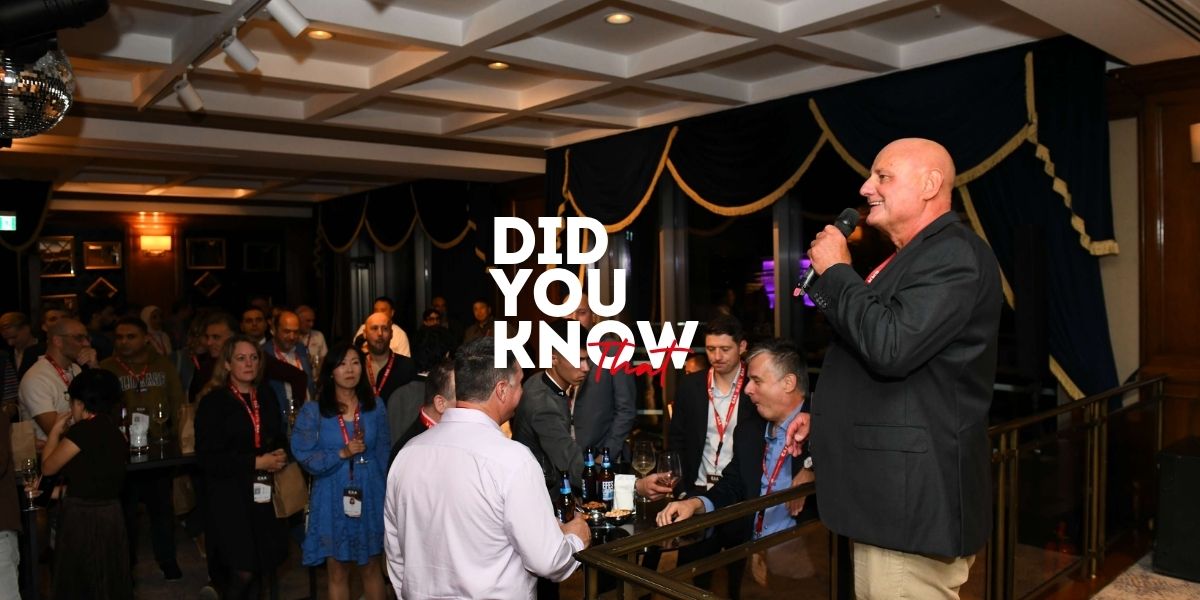
Did You Know That | Week 41 | 2026
Record Golden Week capacity masks underlying disruption, with vessel bunching caused by Asian port congestion raising the risk of oversupply, blank sailings, and schedule volatility later this month
Did You Know That…
…Asia-Europe box rates brace for post-Golden Week reckoning
- Record Golden Week capacity masks underlying disruption, with vessel bunching caused by Asian port congestion raising the risk of oversupply, blank sailings, and schedule volatility later this month
- More than 2m teu has returned to Suez routings since May, improving vessel productivity and adding capacity to a trade already facing downward pressure on rates
- An early Chinese New Year demand rush could tighten conditions, potentially leaving European importers renegotiating 2027 contracts against a firmer market than current spot rates suggest.
Nearly three months of falling container freight rates have left Asia-Europe carriers struggling to restore pricing power, but congestion, returning Suez Canal services and the prospect of an early Chinese New Year surge are setting the stage for a volatile fourth quarter.
.
….Shipping at ‘unique moment in history’ as conflicts fail to derail demand
- Disruptions in the 2020s have reduced effective vessel supply but have not caused economic fallout that reduces aggregate cargo demand
- Higher cargo demand has recently been driven by AI infrastructure spending and increased defense spending, according to Navios’ Angeliki Frangou
- Disruptions are driving owners to expand fleets; concurrently, nationalistic interest in shipping is increasing.
How has the global economy — and cargo demand — remained so strong despite so many trade disruptions over the course of the decade?
…Germany and France want EU storm gates for China’s trade surge. A bold joint letter suggests confrontation looms with China. IN CHINA’S eyes, Europe is weak and divided. It has neither the prowess to compete in technologies like artificial intelligence nor the military strength to defend itself. Its economy depends on Chinese rare earths and other supplies, and its companies are no match for their Chinese rivals’ innovation. Endless elections and diverging interests prevent the eu from building a united front. In the escalating trade spat between the two powers, why would China make any concessions?
That was the starting point from which the eu embarked on trade negotiations with China in June. Its grievances are legion. Chinese firms threaten Europe’s industry with superior products and lower prices. That, Europeans allege, is in part the result of unfair subsidies and an undervalued currency. Nor is China willing to share its technology when investing in Europe. Then there is China’s weaponization of its control over critical inputs, such as rare earths, needed by defense firms, among others. China’s support for Russia’s war in Ukraine also infuriates Europeans. The final round of talks began on October 8th. To boost the EU’s negotiating position, on October 5th France and Germany sent an astonishing letter to the European Commission with far-reaching proposals on how to deal with China’s export machine (without mentioning the country). Next week a summit of European leaders will decide whether to follow the pair’s lead. Most are expected to fall into line.
…Global crude exports have recovered from Hormuz crisis, but can it last?
- Volume of global seaborne crude exports is back to year-ago levels and up 10% vs 2021-2025 average, according to Vortexa data
- VLCC volumes were particularly hard-hit by the Hormuz crisis. They are now back in line with the 2021-2025 average
- Rebound has been driven by revived exports from the Middle East, which now account for 40% of global crude seaborne flows vs a low of 20% in May.
Seven months after the Hormuz crisis began, global crude flows have finally normalised, but the rebound’s sustainability is uncertain, and there is nothing normal about the crude tanker freight market.
…Middle East Gulf product loadings rebound but lag crude recovery amid refinery outages
- September loadings at MEG ports rose 50% month on month and were 164% above the crisis low
- Refined product loadings remain below pre-crisis levels as Middle East refineries operate at reduced rates
- Red Sea attacks and refinery outages have pushed more Saudi crude exports through Hormuz, widening the gap between crude and product loadings.
More CPP is being shipped to Fujairah for re-export or transferred via STS outside Hormuz and in the Gulf of Kutch near India’s Jamnagar refining hub.
…Red Sea container transits hit post-crisis high as carriers accelerate return
- Suez container transits hit 314 in September, up 64% year on year and the highest since the Houthi attacks began
- Premier Alliance joins the return, rerouting two Asia-North Europe loops through the Red Sea in both directions
- Rates are under pressure, with an estimated 35% of Asia-Europe sailings now using the Red Sea.
Data shows Bab el Mandeb transits at their highest since the crisis began, as the industry’s Cape detour unwinds faster than expected.
…Battery-powered fleet expands as deep-sea sector awaits breakthrough
- Battery-electric propulsion is rapidly expanding across the maritime sector as battery energy density improves, costs fall and safety systems become more sophisticated
- The technology has moved beyond small ferries and pilot projects into large ro-pax vessels, feeder containerships, and dry cargo carriers
- The latest lithium iron phosphate batteries are making electric power increasingly attractive because of their thermal stability, longer operating life and lower cost.
Despite rapid progress, fully electric deep-sea cargo ships remain technically and commercially difficult as energy requirements would require batteries occupying substantial cargo space, while ports would need vastly larger charging infrastructure.
…Record Arctic box ship traffic fails to thaw opposition from big carriers
- September set a record for Arctic container traffic, with nine Northern Sea Route transits and 2026 already surpassing previous years
- Chinese operators are expanding seasonal Arctic services, while South Korea has completed its first government-backed container voyage via the route
- Maersk, MSC, Hapag-Lloyd and CMA CGM continue to reject the Northern Sea Route, citing environmental risks, limited infrastructure, and poor economics.
Record Arctic container traffic is being driven by Chinese and South Korean operators pursuing shorter, strategically attractive routes, but major liner carriers remain unconvinced the Northern Sea Route can overcome its environmental, operational, and commercial constraints.
…Germany blocks Cosco’s acquisition of logistics firm Zippel over security concerns
- Zippel provides logistics support to Nato and the German military, raising red flags with intelligence agencies
- The decision marks Germany’s ninth blocked foreign investment deal and signals a tougher stance on Chinese investment
- German government says the deal would have increased supply-chain dependencies and undermined the resilience of German and EU supply chains.
The blocked deal underscores how logistics infrastructure has become a frontline in Europe’s evolving approach to economic security
…EAA Network Annual Conference 2026 – Istanbul. Today, we successfully concluded our EAA Network Annual Conference 2026 in Istanbul.
It was a pleasure to bring together more than 120 participants from over 60 countries to exchange ideas, strengthen relationships, and build bridges across our global logistics network.
The conference was marked by active participation, valuable contributions, inspiring discussions and, above all, a wonderful spirit of collaboration and friendship.
A big thank you to everyone who contributed to making this conference such a success. You can find the photos of the event here: EAA 07.10.2026 İSTANBUL SWISSHOTEL - Google Drive
and here: EAA NETWORK SWISSHOTEL İSTANBUL 2026 - Google Drive